
More Than Stone: The Hidden History Behind Scarborough’s Market Cross
When we think of a 17th-century marketplace, our minds usually picture the lively chaos—stallholders shouting their wares, the smell of fresh bread and drying fish, and crowds haggling over coppers. But standing right in the center of that bustle was an object that dictated the moral and legal rhythm of the entire town: The Market Cross.
In the 17th century, a market cross wasn't an unusual sight. Across early modern England, virtually every active market town and city—roughly 700 to 800 locations—possessed at least one market cross anchoring its trading square. They were part of a vast medieval landscape that once featured over 12,000 standing crosses of all kinds across the kingdom.
A Silent Anchor for Honest Trade
In the 1600s, a market cross was far more than a convenient meeting point. It was the literal and moral anchor of a town's commerce.
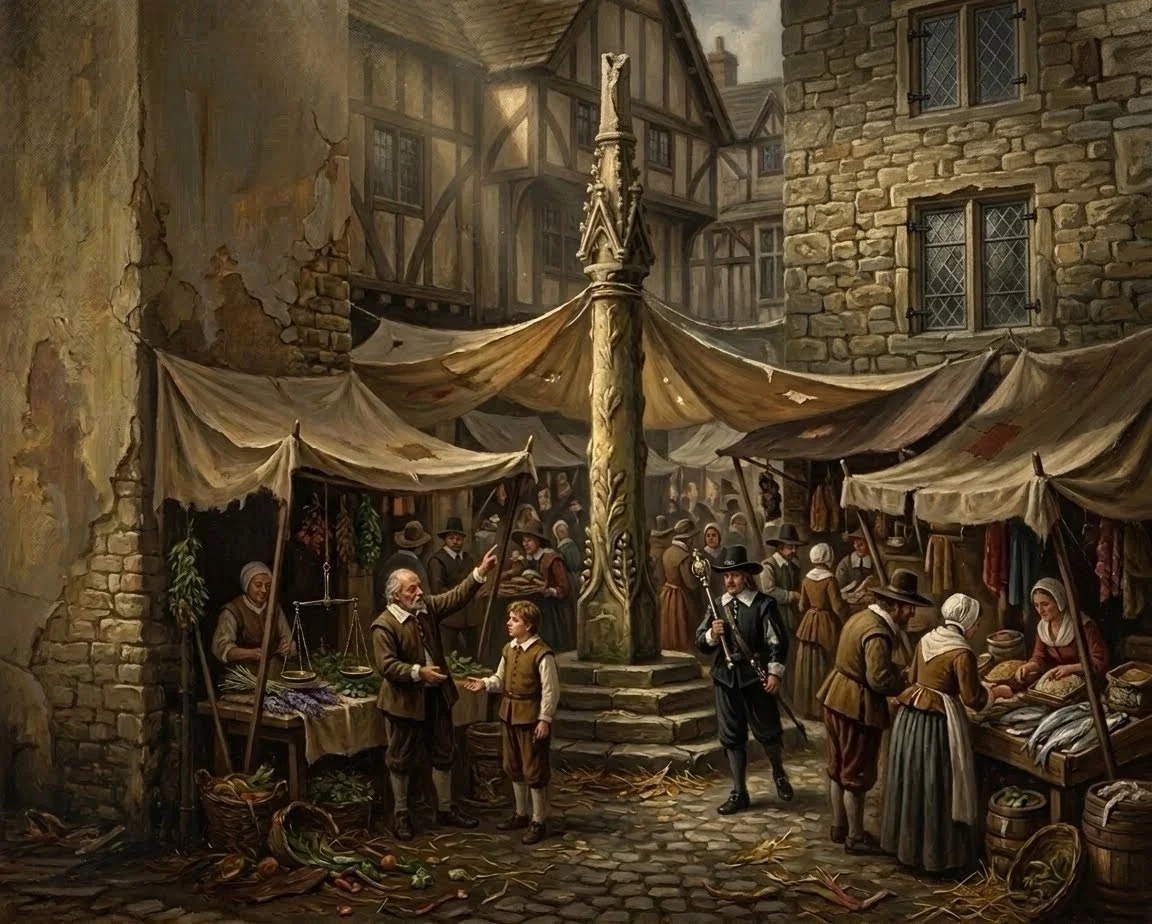
Erected as visual reminders that all buying and selling took place under royal authority and a higher spiritual witness, these stone pillars demanded accurate scales, honest weight, and fair dealing. It was where local bailiffs enforced market laws, regulated grain prices, and publicly punished merchants who cheated their neighbors, whether by short-weighing flour or clipping silver coins.
Scars of the Civil War
During the "troubled times" of the English Civil Wars in the mid-17th century, many market crosses were targeted by Puritan iconoclasts. Carvings of Christ or medieval saints were knocked down or defaced. Yet, even when the religious imagery was stripped away, the stone shafts remained, standing as stoic witnesses to the community’s shared standards of integrity.
In Scarborough Fair, young apprentice Tom Craggs learns his trade beneath the canvas awning of Abel Hawthorne’s herb stall near the Market Cross. When temptation strikes, his master points to the central stone pillar, reminding Tom that a man’s word and an honest measure are worth far more than a handful of quick pennies earned through deceit.
History You Can Still Touch Today
Out of the thousands of market and standing crosses that once dotted the English landscape, fewer than 2,000 survive today in any form.
That makes one of my favorite discoveries during research all the more remarkable: while the 17th-century timber stalls, Flemish traders, and bustling crowds of Scarborough's Great Mart have long since vanished, history left a tangible footprint.
The original, weathered stone pillar of the medieval Market Cross still stands in Scarborough today.
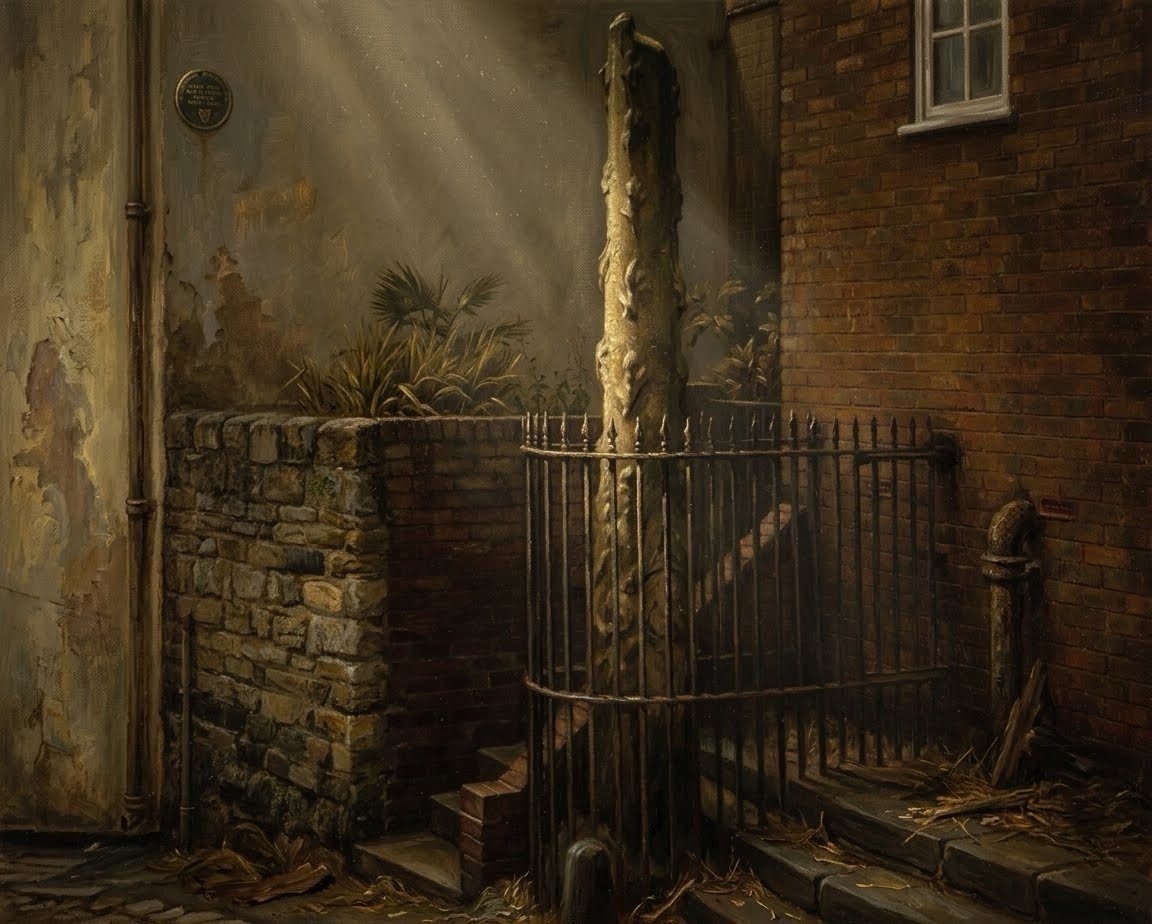
If you look closely at the surviving stone column, you can still see faint carvings of crocketed leaves running up its angles, a decorative style typical of Gothic church architecture. Research from the Scarborough Civic Society suggests that the original 14th-century market cross was replaced in the mid-16th century using an ornamental stone pinnacle salvaged from a demolished local church. When King Henry VIII dissolved the local friaries and medieval chapels (such as the nearby Chapel of the Holy Sepulchre), resourceful townspeople repurposed the salvaged church stone to stand as their market cross.
It is a quiet, centuries-old monument surviving at the town's historic heart. Whenever I look at it, I can’t help but picture Tom and Abel wrapping their bundles of dried lavender and tying the Anne’s Grace knot in its shadow.
Scarborough Fair (Book One of the Heartsong Anthology) is now available on Amazon in hardcover, paperback, and eBook at https://a.co/d/08aeOFyq.
