
Where’s The Tea? The Surprising Truth About 17th-Century Yorkshire
When modern readers step into a historical novel set in England, they often expect a familiar scene: a weary character sitting by a roaring hearth, clutching a warm, comforting cup of tea. Yet, as you journey through the pages of Scarborough Fair, set along the Yorkshire coast between 1670 and 1698, you won’t find a single teapot, tea leaf, or afternoon cup mentioned.
This wasn't an oversight. It was a deliberate choice rooted in meticulous historical accuracy. While tea is virtually synonymous with British culture today, the reality of 17th-century England was vastly different.
The Exorbitant Luxury of the 17th-Century Tea Trade
In Restoration-era England (1660–1690s), tea was not a cozy daily staple—it was an exotic, astronomical luxury.
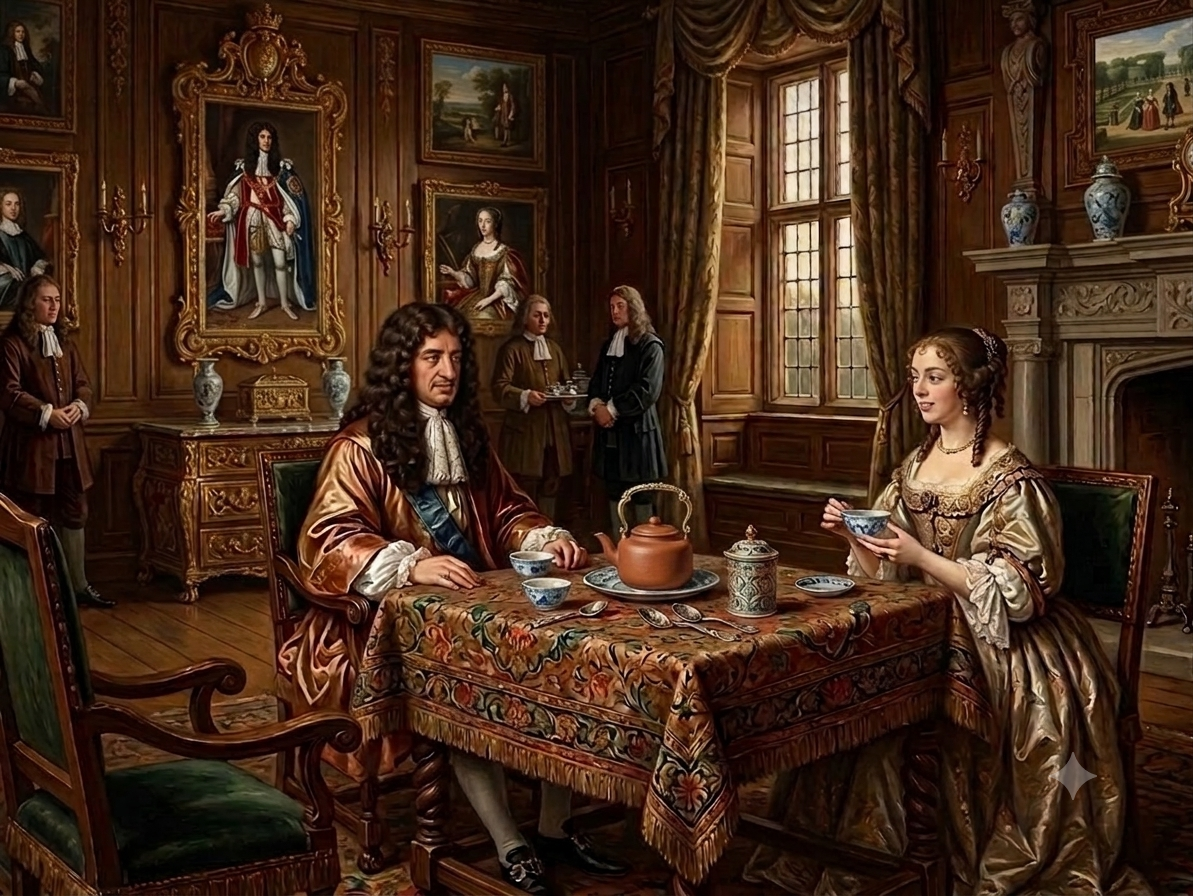
Imported strictly from China through complex maritime trade routes, tea leaves (then often referred to as "cha" or "tay") were exceedingly rare and subject to massive crown tariffs. A single pound of tea could cost up to £6 to £10—a staggering fortune at a time when a skilled laborer or artisan earned roughly £20 to £30 for an entire year's work.
Because of its exorbitant price, tea in the 1670s was strictly confined to:
Royalty & High Court Nobility: Catherine of Braganza, the Portuguese princess who married King Charles II in 1662, is widely credited with popularizing tea among the royal court, bringing her habit of daily tea-drinking from Portugal.
London’s Elite Coffee Houses: A handful of high-end London coffee houses offered it to wealthy merchants and aristocrats as a medicinal tonic.
For a humble herb peddler like Thomas Craggs, an apprentice, or the working fishing families of Filey and Scarborough, a cup of real Chinese tea was as distant and unreachable as the moon.
What Did 17th-Century Yorkshire Folk Actually Drink?
If Tom and Elspeth weren't sipping Black Tea or Earl Grey, what was filling their cups?
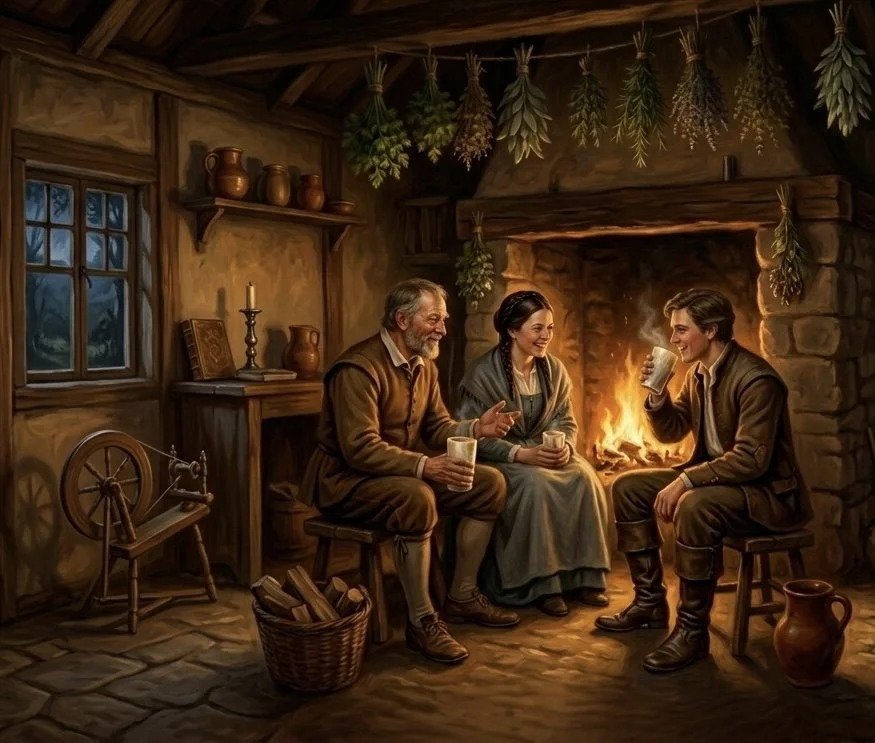
To stay accurate to the social history of the Yorkshire coast, Scarborough Fair highlights the true daily beverages of the era:
1. Herbal Tisanes & Infusions
Rather than imported tea leaves, common folk relied on native plants gathered from local gardens and hedgerows. In Abel Hawthorne’s herb shop, "teas" were herbal infusions crafted for health, digestion, and comfort:
Peppermint & Spearmint: Steeped to settle digestion, ease bellyaches, or refresh the breath.
Sage & Honey: Used as a warm throat tonic during bitter coastal gales.
Chamomile & Valerian: Brewed to soothe frayed nerves or cool a sudden fever.
2. Possets & Mulled Cider
For warmth, comfort, or winter cheer, 17th-century households turned to rich, warm brews steeped in local traditions:
Possets: A staple of Restoration comfort and bed-time nourishment, a posset was a rich hot drink made by curdling heated milk with cider, then sweetening and seasoning it with spices like nutmeg, cinnamon, or ginger. Doubling as both a treat and a vehicle for medicinal herbs, possets were frequently brewed to warm cold bones after a long day on the windswept coast or to soothe a sickbed.
Mulled Cider & Wassail: In cider-producing regions and coastal market towns, locals warmed apple cider over the hearth. Stewed gently with cloves, cinnamon, dried apples, or honey, mulled cider provided essential calories and winter warmth. During Yuletide festivities and colder months, spiced cider was shared directly from a central "wassail bowl" to toast to health, community, and good fortune.
The Honor of Historical Integrity
In historical fiction, it is remarkably easy to slip modern assumptions into past eras. It would have been effortless to have Tom offer Elspeth a steaming cup of tea during a quiet moment in the shop.
However, honoring the lived reality of ordinary 17th-century people means respecting their true constraints, tastes, and daily lives. Omitting tea preserves the authentic atmosphere of Restoration Yorkshire—a world where the scent of wild rosemary, dried sage, and salt spray defined the air.
Frequently Asked Questions About 17th-Century Tea
Q: When did tea become popular in England?
A: Tea remained a luxury for the ultra-wealthy throughout the 17th century. It did not become a widespread, everyday beverage for the British working classes until the mid-to-late 18th century, when lower East India Company tariffs and mass smuggling made it affordable.
Q: Did people drink tea during the outbreak of the Great Plague?
A: No. During coastal plague outbreaks in the 1670s, people relied on herbal "fever-teas" made of rue, hyssop, and vinegar, rather than imported tea leaves.
Experience the authentic sounds, scents, and history of the 17th-century Yorkshire coast in Scarborough Fair (Book One of The Heartsong Anthology), available now in Hardcover, Paperback, and eBook.
