
Clipped Shillings: The Crime That Almost Collapsed 17th-Century England
When historical fiction enthusiasts think of infamous crimes in Restoration England, highwaymen, pirates, and smugglers usually steal the spotlight. But during the late 17th century, a far more quiet, pervasive crime threatened to destroy the kingdom’s entire economy from within: coin clipping.
In Scarborough Fair, when young Roger Fletcher is sentenced to three days in the Market Cross stocks, his crime isn't highway robbery—it's using a clipped shilling to balance his scales and cheat merchants out of their fair measure.
Why was trimming a tiny sliver of silver off the edge of a coin considered high treason—and how did Sir Isaac Newton eventually step in to stop it?
What Was Coin Clipping?
Before the late 1600s, British silver coins were not produced by precise factory machinery. They were hammered by hand, resulting in irregular, uneven edges.
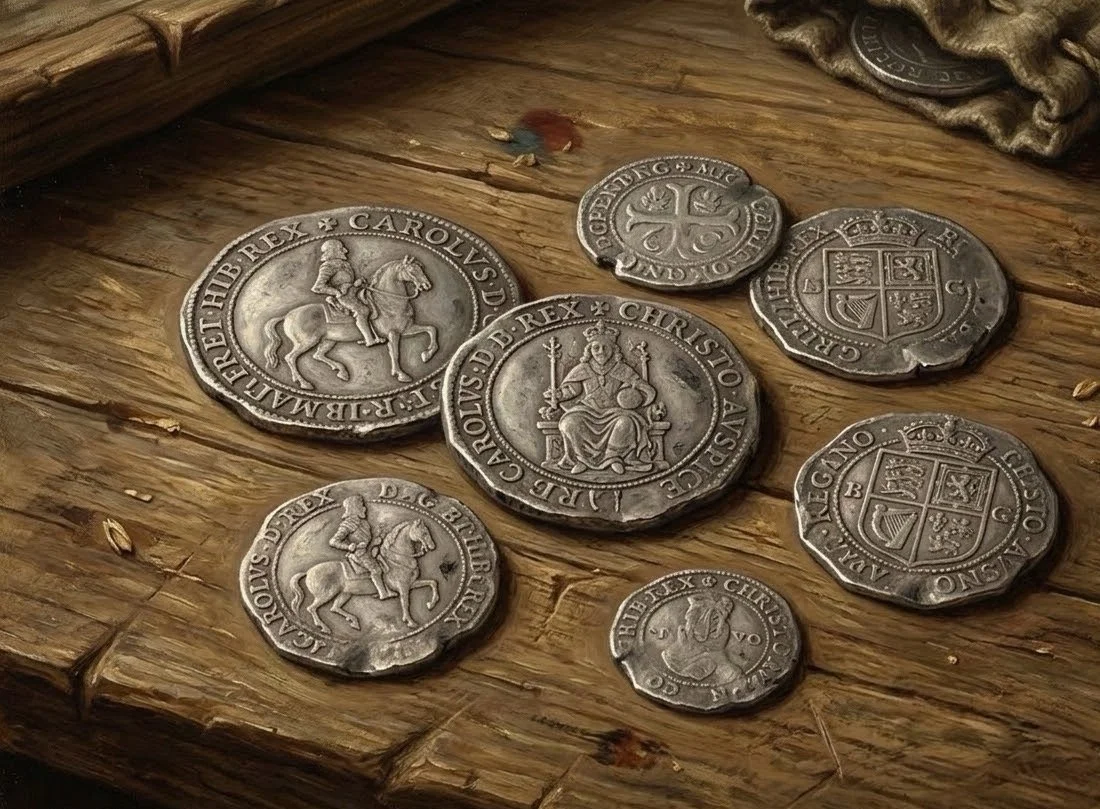
Criminals quickly realized that if they shaved or clipped a paper-thin sliver of silver from the rim of a coin before passing it along at full face value, no one would notice at first glance. By collecting hundreds of these tiny silver shavings, "clippers" could melt them down into bars, sell the raw bullion to illicit blacksmiths, or forge entirely new counterfeit coins.
By the 1670s, the practice had become an epidemic. Almost every silver shilling and crown in circulation was battered, clipped, and degraded. Merchants began weighing coins rather than accepting them by face value, causing massive inflation, street brawls, and widespread economic distrust across trading hubs like Scarborough.
Stocks, Shame, and the Gallows
The English Crown viewed coin clipping not as simple theft, but as an attack against the monarch’s image and sovereign authority.
For minor offenders, local bailiffs enforced public humiliation in the town stocks—as seen in the Market Cross square of Scarborough Fair. But for habitual clippers and counterfeiters, the punishment was ruthless: death by hanging at Tyburn.
Despite the harsh penalties, the crime was so lucrative that people continued clipping silver right under the eyes of the law.
Sir Isaac Newton & The Great Recoinage of 1696
By the mid-1690s, the currency crisis reached a breaking point. Parliament decided to execute The Great Recoinage of 1696, recalling all old, handmade silver coins nationwide to melt them down and start fresh.
To oversee this monumental task, the Crown appointed none other than Sir Isaac Newton as Warden of the Royal Mint.
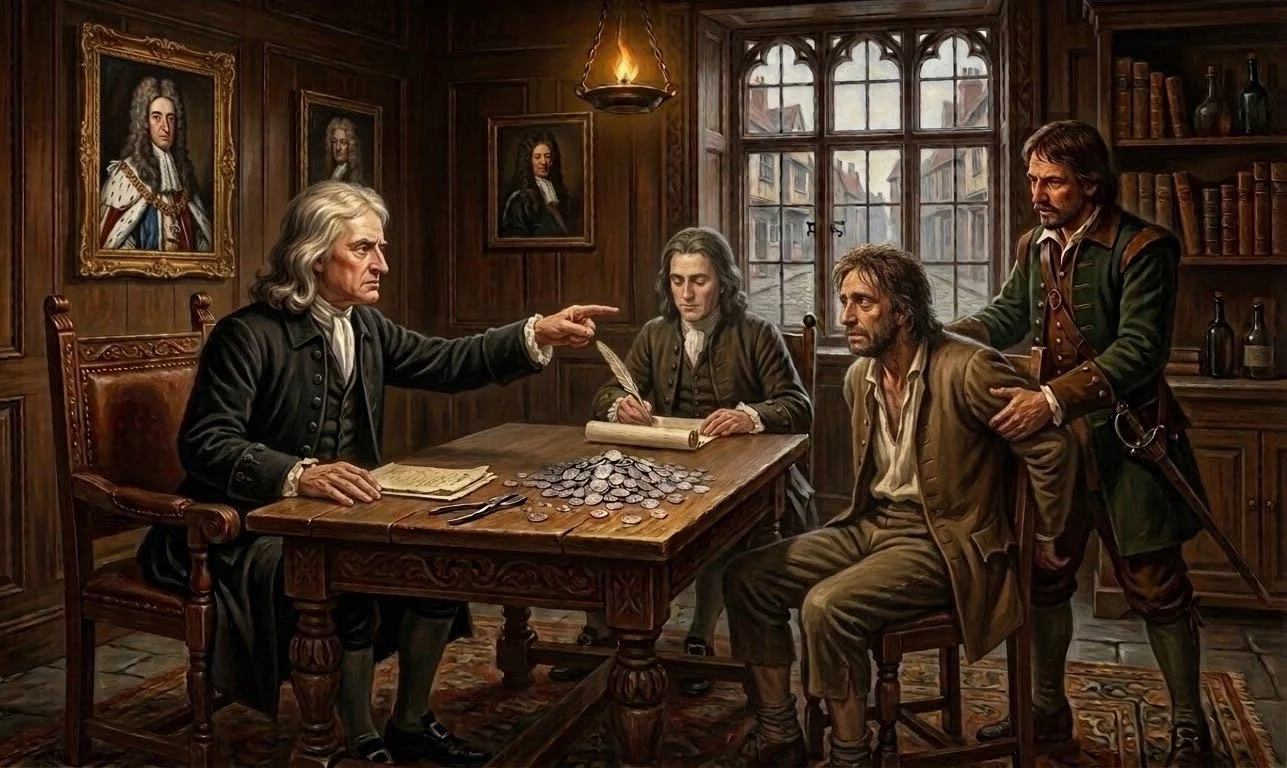
Newton didn't treat the job as a quiet retirement post. Applying his legendary mathematical rigor, Newton set up intelligence networks, went undercover into London taverns, and personally interrogated counterfeiters.
More importantly, Newton oversaw the industrial production of machine-minted coins featuring milled, reeded (grooved) edges. If a criminal attempted to clip a new coin, the grooved pattern around the border was immediately destroyed, making the forgery instantly detectable.
Preserving History in Fiction
In writing Scarborough Fair, honoring these subtle economic realities was essential to building an authentic world. It reminds us that behind every traditional song and historical setting lies a world of real human struggles, everyday survival, and changing times.
Discover the authentic history, trades, and drama of 17th-century Yorkshire in Scarborough Fair (Book One of The Heartsong Anthology), available now in Hardcover, Paperback, and eBook.
