
Thee, Thou, and You: The Unspoken Rules of 17th-Century Dialogue
When readers open a historical novel and encounter words like thee, thy, or thou, they often assume these pronouns were used purely for archaic formality, evoking the elevated prose of Shakespearean drama or the King James Bible.
Yet, if you stepped into the bustling Market Cross of Scarborough in the 1670s, you would find that thou and you were used in a dynamic, highly personal social dance. Far from being polite formality, these words mapped the invisible boundaries of authority, social standing, and love.
In writing Scarborough Fair, honoring these subtle linguistic shifts was essential to crafting authentic dialogue along the windswept Yorkshire coast.
The Language of the Market vs. the Heart
In 17th-century England, the distinction between thou (informal/singular) and you (formal/plural) operated much like the distinction between tu and vous in French, or tú and usted in Spanish.
"You" (The Formal Shield): You was the polite, safe currency of public life. It was used when speaking to strangers, professional partners, customers, or social superiors. It maintained a respectful distance between individuals.
"Thou / Thee / Thy" (The Intimate Bond): Thou belonged to the private sphere. It was the language of the hearth, spoken between husbands and wives, parents and children, or lifelong friends.
When Tom Craggs and Elspeth Hawthorne converse throughout the story of Scarborough Fair, their shift between you and thou isn't a stylistic affectation. It mirrors the exact moment their public professional boundary gives way to personal trust and complete devotion.

The Asymmetric Edge: Authority and Insult
While thou signaled warmth between equals, it possessed a sharp, asymmetric edge when used across social classes:
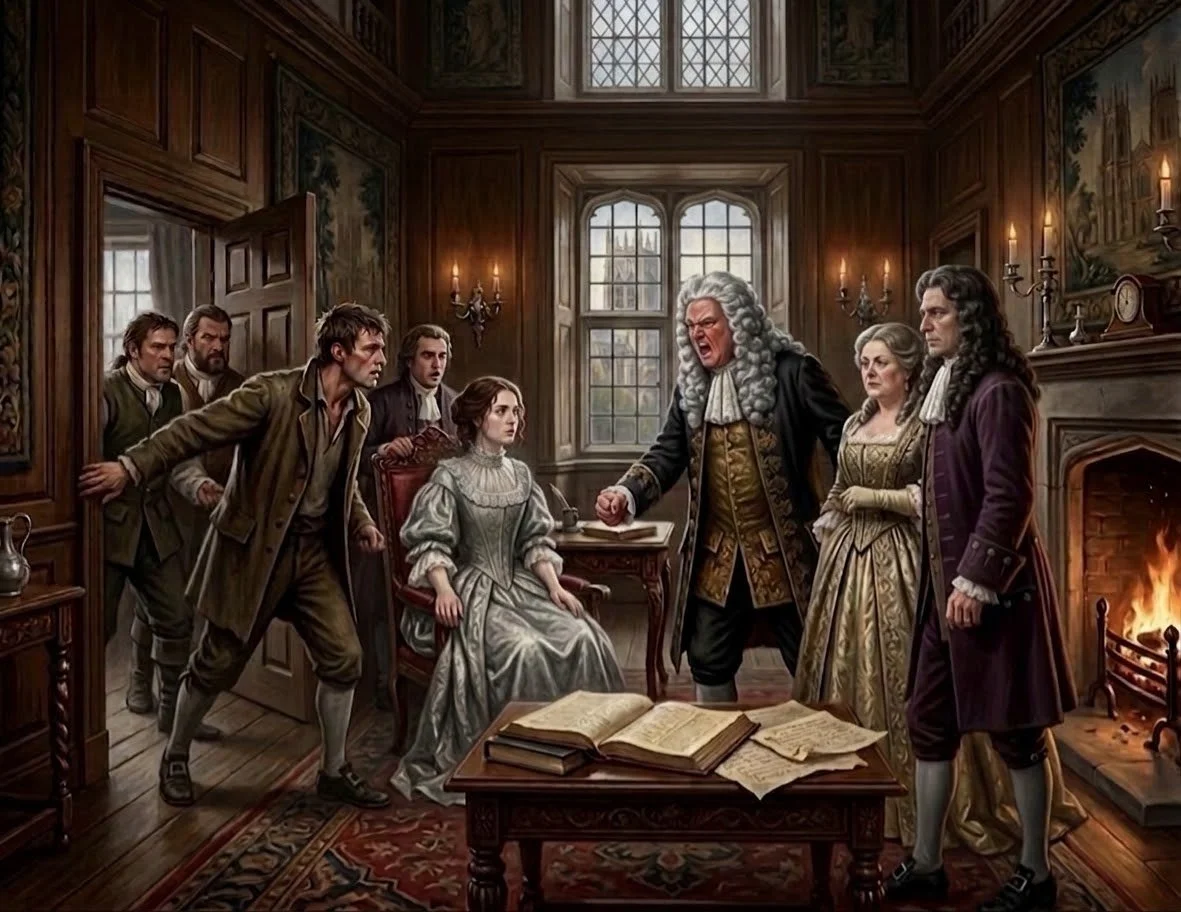
1. Top-Down Authority: Social superiors routinely used thou when addressing servants, apprentices, children, or prisoners, while the subordinate was strictly required to respond with a respectful you.
2. A Public Insult: To mistakenly (or deliberately) use thou with a social equal or superior in public was a grave insult. It implied that the listener was beneath notice, stripped of their public dignity, or had no right to boundaries.
When arrogant merchants or hostile figures address young Tom with a sharp thou, they are putting an apprentice in his place. Conversely, when old friends like Will Reed and Tom speak using thou on the shingle, it signifies an unshakeable brotherhood forged by time and shared hardship.
Why Historical Dialogue Matters
It would be easy in historical fiction to default entirely to modern speech patterns to make dialogue effortless for the reader. However, stripping away early modern pronouns removes the rich emotional texture of the era.
By maintaining the historical integrity of 17th-century Yorkshire speech, Scarborough Fair allows readers to experience the true cadence of Restoration life, where a single choice of pronoun could convey a declaration of love, a nod of master-apprentice respect, or a subtle line drawn in the sand.
Experience the authentic sounds, trades, and romance of 17th-century Yorkshire. Scarborough Fair (Book One of the Heartsong Anthology) is available now in eBook, paperback, and hardcover. Read Chapter 1 for free!
